
You probably have at least 25 unused electronic devices sitting in drawers or cupboards right now. Most households do because most neglect their old electronics recycling. And most people have no clear plan for what to do with their old electronic devices when they go wrong..
Here’s the key issue: those devices aren’t just clutter. They hold real financial value, and they carry real environmental risk.
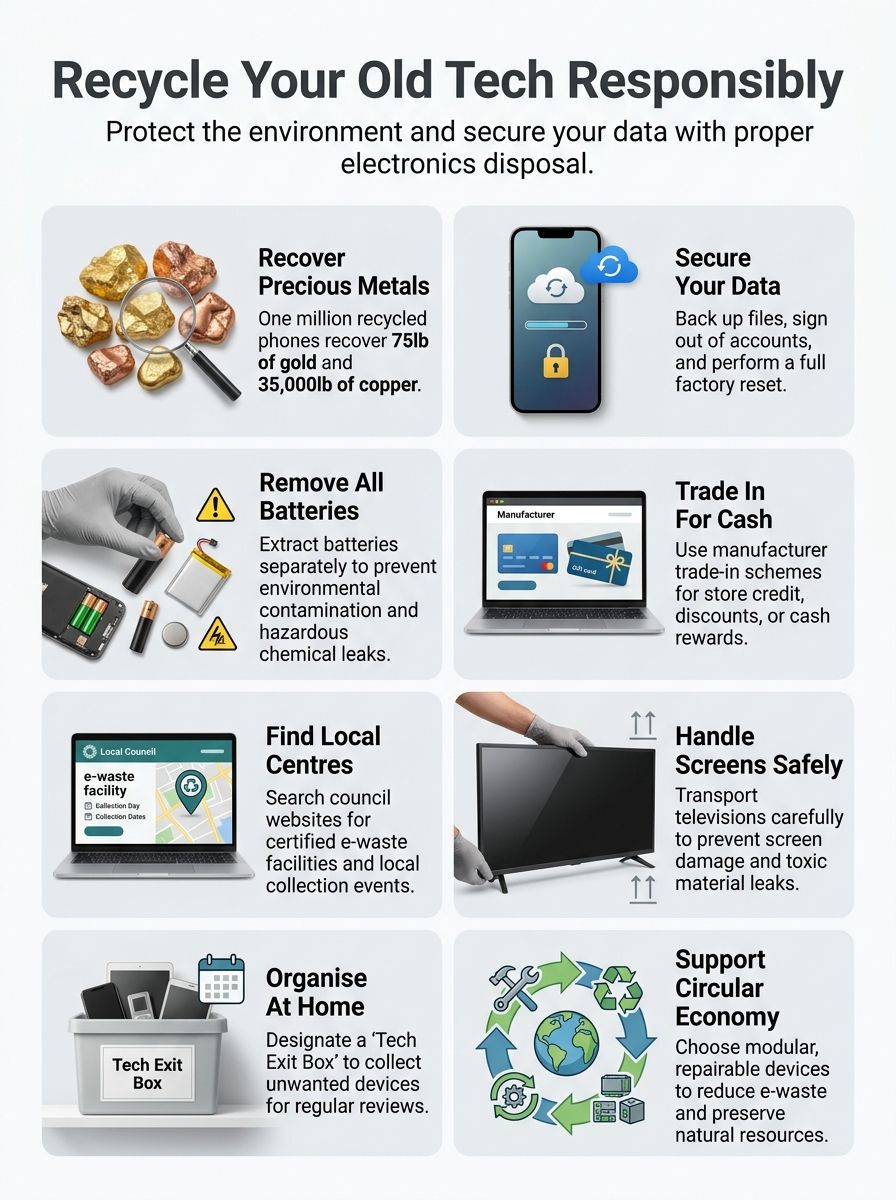
Recycling one million mobile phones recovers 35,000 pounds of copper, 772 pounds of silver, 75 pounds of gold, and 33 pounds of palladium. That’s serious material wealth locked inside your old devices.
Yet globally, enough e-waste is generated each year to fill 100 Empire State Buildings. Toxic materials like lead, mercury, and cadmium leak into soil and water every time a device ends up in a landfill. A single mobile phone battery can pollute 600,000 litres of water. One old TV can contaminate 50,000 litres of groundwater.
The damage is real. It’s also entirely preventable.
This guide covers everything you need to handle old electronics recycling the right way. We’ll walk through how to prepare your devices, explore manufacturer trade-in programmes from Apple, Samsung, and Dell, and help you locate local recycling centres near you. Services like Call2Recycle and Earth911 make finding drop-off points straightforward. The EPA and programmes including E-Cycle Washington and the Alachua County Household Hazardous Waste Collection Center provide free or low-cost options. Retailers like Best Buy and Staples offer trade-in options that put money back in your pocket.
We also cover special handling steps for smartphones, laptops, TVs, and batteries, plus how to turn your e-waste into cash and build a simple home recycling system.
Key Takeaways
- Recycling one million mobile phones recovers 35,000 pounds of copper, 772 pounds of silver, 75 pounds of gold, and 33 pounds of palladium.
- Improper electronics disposal releases toxic lead, mercury, and cadmium into soil and water, with one TV contaminating 50,000 litres of groundwater permanently.
- Manufacturer trade-in programmes from Apple, Samsung, and Dell offer free shipping labels and store credit for devices less than five years old.
- Establish a home Tech Exit Box system with quarterly calendar reminders to organise old electronics and prevent hazardous materials from entering landfills.
- Future sustainable electronics feature modular designs for easy repairs, biodegradable components, and extended producer responsibility schemes that reward consumers for proper recycling.
Why Is Responsible Disposal of Old Electronics Important?
Improper disposal of old electronics releases toxic materials into soil and water, harming natural resources and human health across communities. Recycling electronics conserves valuable metals and reduces waste management burdens, whilst preventing hazardous lithium-ion batteries and other components from contaminating our environment for generations to come.
What Happens If Electronics Are Disposed of Improperly?
Throwing old electronics into regular rubbish bins creates serious environmental damage. Toxic materials such as lead, mercury, and cadmium leak into soil and waterways from landfills.
A single old TV can contaminate up to 50,000 litres of groundwater if left in a landfill, whilst a mobile phone battery pollutes 600,000 litres of water without proper recycling. These hazardous substances enter the food chain through contaminated soil and water, affecting both wildlife and human health. Mercury from discarded devices causes respiratory and neurological problems in people who live near waste sites.
Putting batteries in regular rubbish is hazardous and may be illegal in many areas. Yet many households still do it without understanding the consequences.
Your personal information also faces serious risk during improper disposal. Smartphones, laptops, and tablets contain sensitive data that criminals can access from landfills. Hard drives and storage devices retain financial records, passwords, and private communications unless you use proper data destruction methods.
The financial stakes here are significant. According to IBM’s 2025 Cost of a Data Breach Report, data breaches cost businesses and consumers an average of $4.44 million globally, with improperly discarded devices acting as a major preventable entry point for identity thieves. That makes secure disposal far more than just an environmental concern.
Waste management facilities that lack certification cannot safely handle this information, leaving you exposed to identity theft. Responsible recycling programmes run by manufacturers and community collection events ensure your devices reach certified e-waste recycling centres. The U.S. Geological Survey and organisations focused on waste and toxics prevention confirm that proper disposal protects both natural resources and personal security.
How Do Old Electronics Affect the Environment and Health?
Old electronics contain hazardous materials that damage our planet in serious ways. Mercury, lead, and cadmium leak from discarded devices into soil and water supplies. These toxic substances accumulate in the food chain, poisoning plants, animals, and eventually humans who consume contaminated produce.
Harmful chemicals from e-waste cause respiratory problems, neurological damage, and long-term health issues in exposed populations. Unsafe e-waste handling puts both people and wildlife at risk.
Landfills overflow with e-waste that continues releasing pollutants for decades. The problem grows each year as more devices end up in rubbish heaps instead of proper recycling facilities.
Environmental impacts from improper disposal include widespread water and soil contamination across entire regions. Batteries, TVs, and other electronics with severe contamination potential require special attention during recycling.
Responsible electronics and appliances recycling prevents these outcomes from spreading further. Manufacturer recycling programmes, curbside collection services, and residential curbside programmes offer safe alternatives to dumping devices.
Local e-waste recycling centres, including Alachua County rural collection centers, accept old smartphones, laptops, and other gadgets for proper processing. Battery stewardship programmes ensure hazardous power sources receive appropriate handling instead of contaminating ecosystems. Greener gadgets emerge from recycled materials recovered through these legitimate channels.
Why Is Recycling Electronics Important for Resource Conservation?
Recycling electronics recovers valuable materials that manufacturers need for new devices. Recycling one million mobile phones can recover 35,000 pounds of copper, 772 pounds of silver, 75 pounds of gold, and 33 pounds of palladium. These precious metals come from the earth through mining, which costs money and harms landscapes.
Proper recycling reduces the need for new raw materials by reusing valuable metals instead. Resource recovery from electronics helps to minimise environmental impact whilst supporting circular economy initiatives that promote the reuse and recycling of materials.
- Manufacturers across the UK and the United States now embrace extended producer responsibility (EPR) initiatives, allowing consumers to return products for recycling and receive deposit refunds.
- Advanced recycling technologies are being introduced to enhance recycling efficiency, making the process faster and more effective.
- Modular devices are being developed for easier recycling, allowing upgrades or repairs instead of full replacement.
- Biodegradable electronics are a developing trend to further minimise environmental impact.
- Programmes managed by organisations like lightrecycle and the Washington Materials Management and Financing Authority show that responsible disposal creates real value.
Establishing recycling systems through city solid waste services and e-waste recycling centres means fewer raw materials need extraction from the ground. Waste and toxics programmes in regions like Wisconsin and Michigan track these efforts carefully.
Your old devices contain real value. Recycling transforms that value into new products rather than letting it sit in landfills. Every smartphone, laptop, and television you recycle supports a system that conserves Earth’s finite resources for future generations.
Electronics Disposal Checklist
Before you toss out your old gadgets, you need to take a few simple steps. These steps ensure your devices leave your home safely and responsibly.
Your electronics deserve proper handling before disposal. You must check if they still work, explore trade-in options, prepare them correctly, and pick the best disposal method for your situation.
How Can I Check If My Device Still Works?
Testing your device’s basic functionality takes just a few minutes and can dramatically increase its value for resale or donation. Power on your smartphone, laptop, or tablet and check if the screen lights up, the buttons respond, and the device connects to Wi-Fi or mobile networks.
Listen for unusual sounds, feel for unexpected heat, and test the camera, speakers, and microphone. Document what works and what doesn’t. This information helps potential buyers or recipients understand exactly what they’re getting.
Devices that function well deserve a second life through sales or donations rather than immediate recycling. Assess whether professional repairs could restore functionality to a broken device, as fixing a gadget often costs less than replacing it entirely.
Test battery life by charging your device fully, then using it normally until the battery drains completely. Timing your disposal during spring cleaning helps you spot unused but working devices hiding in drawers or cupboards.
A quarterly device assessment gives you the perfect chance to identify electronics ready for reuse or recycling before clutter builds up. If your device passes these checks, explore selling it online, trading it in at a retailer like Best Buy, or donating it to local programmes such as those run by the City of Gainesville.
Are There Warranty or Trade-In Options Available?
Your old device might still hold value, even if you no longer need it. Major manufacturers like Apple, Samsung, and Dell run trade-in programmes that reward you for your older gadgets.
Retailers including Best Buy and Amazon also provide trade-in services, offering cash, store credit, or Best Buy e-gift cards for eligible devices. Local electronics shops often participate in recycling reform act initiatives and may accept your equipment through their own trade-in or recycling schemes.
- Programmes typically accept devices less than five years old.
- Many schemes include free shipping labels, so you can post your device without spending extra.
- Store credit options let you put your recycling earnings straight back into new tech.
- Many schemes accept multiple device types, from phones to computers.
Checking your device’s warranty coverage gives you a clear picture of whether it qualifies for manufacturer recycling or trade-in options. These trade-in opportunities serve a dual purpose: they put money in your pocket whilst keeping electronics out of landfills.
How Should I Prepare My Device for Disposal?
Preparing your device for disposal protects your personal information and maximises its value for recycling or donation. Taking these steps ensures you meet waste and toxics standards whilst safeguarding your privacy.
- Back up all data from your device before you proceed with any disposal method. Use cloud storage or an external hard drive to save important files, photos, and documents safely.
- Sign out of all accounts on your device to prevent unauthorised access to your personal information. Remove your email, social media, and banking credentials from every application.
- Perform a factory reset to erase all stored data completely from your device’s memory. This action removes personal files, settings, and login information.
- Remove batteries from your device as they require separate recycling processes and handling. Batteries contain hazardous materials that need specialised treatment at designated facilities.
- Gather all accessories, cables, and original packaging that came with your device. Include chargers, headphones, cases, and instruction manuals.
- Clean the device thoroughly to make it presentable for donation or resale. Wipe down screens and casings with appropriate cleaning cloths to remove dust and fingerprints.
- Prepare documentation of device functionality to demonstrate its working condition to potential recipients. Note any issues or special features that may affect its usefulness.
- Check if your device qualifies for manufacturer recycling programmes or trade-in options before disposal. Many electronics producers offer schemes that reward you for returning old equipment responsibly.
- Separate peripherals and external components from your main device if necessary. Detach monitors, keyboards, or other attachments to facilitate proper sorting at recycling centres.
One critical warning on the factory reset step: according to a 2025 analysis of secondhand devices highlighted by NE Times, roughly 35% of secondhand mobile devices still contain recoverable personal data even after a standard factory reset. For sensitive devices, use specialist data wiping software or a certified data destruction service, not just the built-in reset function.
What Are the Best Methods to Dispose of Old Electronics?
You have several solid options for disposing of old electronics responsibly. Each method offers different benefits, so choose the one that fits your situation best.
- Use manufacturer take-back programmes for maximum convenience and potential store credit. Companies like Apple, Samsung, and Dell operate these schemes to handle their own products safely.
- Visit electronics retailers such as Best Buy and Staples, which accept a wide range of devices. These shops ensure strong environmental outcomes through proper recycling and resource recovery.
- Contact your local e-waste recycling centres equipped to handle most electronics responsibly. Staff there understand proper handling techniques and recover valuable materials from your devices.
- Explore trade-in programmes if your phones, tablets, or laptops still work reasonably well. These services offer cash or credit while extending device lifespans through resale channels.
- Donate working electronics to charity shops and donation centres for a potential tax deduction. Your old devices benefit schools and charities, giving them a second life in communities that need them.
- Attend community collection events in your area for free recycling and educational resources. These gatherings often provide guidance on waste and toxics handling.
You can also check with the Washington Materials Management and Financing Authority or similar organisations in your region. They coordinate e-waste programmes and direct you to certified recycling facilities. Services like Earth911 and the Zero Waste Wizard tool make searching for drop-off locations straightforward. If you live in specific regions, check local programmes such as E-Cycle Washington or Alachua County’s collection points for approved disposal options.
Popular Electronics Recycling Programmes (Updated for 2025)
Manufacturer programmes, e-waste recycling centres, and community collection events all provide practical pathways to recycle your old devices responsibly. The Washington Materials Management and Financing Authority and similar organisations across the United States have made it easier than ever to find certified recycling options that handle waste and toxics with proper care and strong environmental standards.
What Are Manufacturer Recycling Programmes?
Major tech companies run their own recycling schemes to handle old gadgets responsibly. Apple Trade In accepts Apple devices and Android phones, offering recycling or store credit for your trade-ins. Samsung Recycling Direct provides free recycling for all Samsung products without hidden charges. Dell Reconnect partners with Goodwill to offer free device recycling services across multiple locations.
These programmes typically focus on devices less than five years old, making them ideal for most households. Many schemes include free shipping labels, so you can post your old electronics without spending extra money.
- Participation often results in store credit, discounts, or rewards for future purchases.
- Official schemes extract precious metals, plastics, and glass from your gadgets for reuse.
- Companies like Apple, Samsung, and Dell have invested in infrastructure to process e-waste safely and sustainably.
- Using these programmes means your device won’t end up in landfills, leaking harmful chemicals into soil and water.
Your old electronics contain both valuable materials and hazardous substances that need careful handling. Sending devices through manufacturer recycling programmes ensures proper waste and toxics management and supports resource conservation by channelling precious metals back into new production. The Washington Materials Management and Financing Authority supports such initiatives to protect local communities.
Where Can I Find E-Waste Recycling Centres?
Your local council website holds the key to finding certified e-waste recycling facilities near you. Most councils list their waste management services online, making it simple to locate centres that accept all types of electronics, from mobile phones to televisions.
You can also contact your local waste management service directly by phone or email to ask about drop-off points in your area. Many recycling centres operate as certified facilities equipped to handle electronic devices responsibly. According to EPA guidelines on certified electronics recyclers, the two main standards to look for are “e-Stewards” and “R2” (Responsible Recycling). These badges guarantee that a facility uses ethical domestic processing and won’t illegally export toxic waste to developing countries. Always check for one of these credentials before handing over your devices.
Your postcode search on the council website typically reveals the nearest centre, its opening hours, and what items it accepts.
Local recycling centres recover valuable materials from your old electronics, which reduces environmental impact significantly. These facilities provide documentation for recycled devices, giving you proof that your e-waste received proper treatment. Some centres offer special collection bins designed for batteries, ensuring safe handling of these hazardous components.
You can ring ahead to confirm whether your particular device qualifies for their collection programme. Services like Earth911 and the Zero Waste Wizard tool also let you search for nearby certified drop-off points by postcode. City solid waste services in many areas, including E-Cycle Washington and E-Cycle WA programmes, maintain updated directories of approved facilities.
How Do Community Collection Events Work?
Municipalities and non-profit organisations arrange community collection events to make e-waste recycling easy and free for everyone. These gatherings accept a wide variety of electronic devices, from old smartphones to broken televisions. Residents drop off their unwanted tech without paying any fees.
Local authorities or community groups publicise event dates well in advance, so you can plan your visit around your schedule. The events serve a critical purpose: they prevent improper e-waste disposal in regular rubbish streams, keeping harmful materials out of landfills. Large households find these occasions particularly valuable, as they can recycle multiple devices at once rather than making separate trips to recycling centres.
Participants gain more than just a convenient disposal option. They receive educational resources on responsible disposal and recycling practices. Some events sweeten the deal by offering small gifts or entry into prize draws, turning the experience into something rewarding.
Collection events create ideal opportunities for communities to work together on environmental protection. You’ll discover that attending these gatherings connects you with local recycling infrastructure and helps you understand how your old electronics get processed responsibly.
How Can I Donate Old Electronics Responsibly?
Donating electronics extends their life and benefits others in need. You can turn your unwanted devices into valuable resources for charities, schools, and non-profit organisations.
- Check that your device powers on and functions properly before offering it for donation, as functional electronics suit donation best.
- Goodwill and Salvation Army accept working electronics and refurbish them for resale, helping fund their community programmes.
- Schools and libraries welcome donated technology for educational purposes, so contact your local institutions to learn their specific device needs.
- Charities focused on technology access may have particular requirements, so ring ahead to confirm they accept your device type.
- Wipe your device clean and reset it to factory settings, removing all personal data before handing it over. Use specialist data wiping software for added security.
- Include original chargers, cables, and accessories with your donation to enhance its value and usability for the next owner.
Provide original packaging and manuals if available, as these materials increase the donation’s appeal and functionality. Request a donation receipt from the organisation for tax purposes, as many charities provide documentation for your records. Always verify the organisation’s credentials to ensure your electronics reach trustworthy hands and support genuine causes.
Special Handling Instructions by Device Type
Different devices need different recycling approaches. The steps below cover smartphones, laptops, televisions, batteries, and other household electronics so each one reaches its next life safely.
How Should I Recycle Smartphones Safely?
Recycling your smartphone safely protects your personal data and helps the environment. You must follow specific steps to ensure your device gets handled responsibly throughout the entire process.
- Remove your SIM card and SD card before recycling your phone, as these contain personal information and can be reused in other devices.
- Perform a factory reset to erase all your personal data. Follow this with specialist data wiping software for sensitive devices, as a factory reset alone may not fully remove recoverable data.
- Take off any protective cases and remove all accessories attached to your smartphone, since these items require separate recycling streams.
- Check the manufacturer’s guidelines for recycling or trade-in options available for your specific phone model and brand.
- Store your device in a dry location until you’re ready to recycle it, which prevents damage and maintains its condition for proper processing.
- Verify your phone’s eligibility in trade-in programmes to determine if your model holds any resale value or credit.
- Include the charger when donating or trading in your smartphone, as manufacturers often accept these components together.
- Ensure you comply with local regulations for mobile device disposal in your area, since rules vary by region.
- Choose an accredited e-waste recycling centre carrying the e-Stewards or R2 certification to guarantee your phone receives proper treatment and data destruction.
- Document the serial number of your device before recycling, which helps you track the disposal process if needed for records.
What Is the Proper Way to Dispose of Laptops?
Disposing of laptops properly protects the environment and keeps your data safe. You need to follow specific steps to ensure your device gets handled responsibly.
- Back up all your important files before you do anything else with the laptop.
- Securely erase the hard drive using approved data wiping methods to prevent data theft and privacy breaches.
- Perform a factory reset after data backup and erasure to remove all personal information completely.
- Remove the battery from the laptop if possible, as it requires special recycling treatment.
- Unplug all peripherals and external components, including chargers, cables, and external drives.
- Clean the laptop thoroughly to improve its donation or resale value.
- Gather all accessories such as chargers, cables, and original packaging materials together.
- Check for manufacturer or retailer trade-in eligibility before you dispose of the device.
- Package the laptop securely if you plan to ship it for recycling or donation purposes.
- Contact certified e-waste recycling centres or manufacturer programmes to arrange proper collection.

How Can I Recycle TVs Responsibly?
Television sets contain valuable materials and hazardous substances that require careful handling during recycling. Proper TV disposal protects the environment and recovers resources for future use.
- Transport your television with extreme care to prevent screen damage during the journey to a recycling facility.
- Keep all original parts and accessories together with the TV unit to ensure complete recycling of all components.
- Contact local recycling centres beforehand to confirm they accept television units before you transport yours.
- Remove batteries from remote controls before recycling, as these require separate handling and processing.
- Clean both the television and remote thoroughly before donation or recycling to improve their condition.
- Use appropriate packaging materials to secure your TV during transit, protecting the screen and internal components.
Seek professional assistance for disposing of large or wall-mounted television units that are difficult to handle alone. Check with retailers and manufacturers, as some offer collection or recycling services for old television sets. Brands such as Insignia and Dynex operate take-back schemes that recover valuable resources. Pack the television in its original box if available, or use sturdy cardboard with protective padding, and verify that your local e-waste recycling centre has the proper equipment to safely dismantle TV units.
How Do I Handle Batteries for Recycling?
Batteries contain hazardous materials that require special handling to protect our environment and your safety. Improper disposal may break the law in your area, so learning the correct process matters.
- Remove all batteries from your device before sending the main item for recycling, as they need separate treatment.
- Store batteries in a dry location away from moisture until you take them to a recycling point.
- Never dispose of batteries in regular rubbish, as this practice is often illegal and causes environmental contamination.
- Take your batteries to designated battery recycling locations in your community, such as local waste centres or specialist facilities.
- Check with retailers and recycling centres near you, as many provide dedicated battery recycling bins for public use. According to the 2026 Call2Recycle program guidelines, the Call2Recycle network offers thousands of free retail drop-off locations, including major partners like Home Depot and Lowe’s, specifically for rechargeable batteries weighing up to 11 lbs. This gives you familiar, easy-to-reach options rather than searching for specialist facilities.
- Keep batteries away from heat and metal objects while storing them, preventing accidental short circuits or fires.
- Follow your local regulations for battery disposal and recycling, as rules vary between regions.
- Separate different battery types, such as alkaline, lithium, and rechargeable batteries, if your recycling centre requests this.
Place batteries in a clear container so recycling staff can identify them easily during the collection process. Proper battery recycling through battery stewardship programmes prevents hazardous materials from leaking into soil and water supplies in your area.
What Are the Disposal Guidelines for Other Devices?
Many household devices need special care during recycling. Your old gadgets contain valuable materials and hazardous substances that require proper handling.
- Microwave ovens hold magnetrons and capacitors that pose electrical risks. Remove the power cord before transport to any e-waste facility.
- Computer monitors and older CRT screens contain lead and phosphor coatings, so take them to certified recycling centres that handle these toxic materials safely.
- Printers require toner cartridge removal before disposal, as ink and toner create environmental contamination if left inside during recycling.
- Routers and modems need factory resets to clear stored data and network settings before you hand them over to recycling programmes.
- Digital cameras and camcorders contain lithium-ion batteries that you must remove separately. Store these batteries in a fireproof container until collection day.
- Scanners and copiers feature similar components to printers, so extract all toner supplies and follow manufacturer recycling instructions for proper e-waste disposal.
- Portable speakers and Bluetooth devices require battery extraction first. Check the device manual for safe opening procedures to access internal power cells.
- Cordless phones and landline handsets contain rechargeable batteries that need removal before recycling to prevent fire hazards at processing facilities.
- External hard drives and USB storage devices demand data destruction through certified wiping services. Never assume deletion alone protects your personal information adequately.
- Fax machines combine printer and electronic components, so contact the manufacturer for specific recycling guidance suited to your particular model and age.
How Can I Turn E-Waste into Cash?
Your old electronics hold real value, and you can turn them into cash through several proven methods. Selling or trading in working devices brings more money than recycling non-functional ones, so check your device’s condition first.
The numbers might surprise you. According to a 2024 mobile industry trends report by Assurant, the average trade-in value for mobile devices reached $141.02, with iPhones averaging nearly $198. That’s a meaningful sum sitting in your drawer, and it depreciates every month you wait.
Manufacturers and retailers offer trade-in programmes that provide cash, credit, or gift cards for your old phones, laptops, and tablets. Timing matters greatly: September brings peak demand before new iPhone launches, January sees post-holiday upgrades, and spring cleaning periods attract buyers seeking deals.
- Keep your original packaging and all accessories together, as this boosts resale value significantly.
- Document your device’s functionality with photos or videos showing screens work and buttons respond properly.
- Professional repairs can push your device’s market value higher, making the investment worthwhile before you sell.
- Online marketplaces, certified refurbishers, and second-hand retailers actively purchase working electronics at competitive prices.
Trade-in schemes from major retailers often beat private sales for convenience, though they may offer lower amounts. Specialist e-waste companies and mobile phone buyback services evaluate your devices quickly and pay fairly. List your electronics on reputable platforms during peak seasons to reach the most interested buyers.
Include detailed specifications, honest descriptions of any wear, and clear photos showing all angles. Your old smartphone, tablet, or laptop transforms from clutter into cash through these channels, rewarding you for responsible disposal while keeping functional devices out of landfills.
How Do I Create a Tech Exit Box for Recycling?
A Tech Exit Box keeps your home organised and makes e-waste recycling simple. This dedicated container prevents old gadgets from cluttering your space whilst supporting a proactive approach to electronic disposal.
- Find a sturdy container, such as a plastic storage box or cardboard carton, that fits comfortably in your home. Choose one large enough to hold several devices without becoming too heavy to move.
- Place the Tech Exit Box in an accessible location where all household members can easily add their old electronics. A hallway cupboard, garage shelf, or spare room corner works well.
- Label the container clearly with “Tech Exit Box” or “E-Waste Recycling” using a marker or printed sticker. Clear labelling ensures everyone knows what the box is for and uses it correctly.
- Stock basic recycling supplies near the box, including small bags, tissue paper, and labels for device information. These materials protect your electronics and help you track what needs disposal.
- Set a quarterly calendar reminder to check the box and prevent overflow of unwanted devices. Mark these dates on your phone or wall calendar to maintain consistency with your recycling schedule.
- Review items in the Tech Exit Box during your annual spring cleaning session each year. This timing helps you assess what needs recycling and plan your next disposal trip accordingly.
- Sort devices by type, such as smartphones, laptops, and batteries, to streamline the recycling process later. Grouping similar electronics makes it easier when you contact recycling centres or manufacturers.
- Before placing loose batteries into the box, cover their exposed terminals with clear packing tape or electrical tape. According to EPA battery disposal safety guidelines, this simple step prevents lithium-ion and 9-volt batteries from sparking against other metal objects and causing a fire hazard in your home.
- Keep a simple inventory list attached to the box showing which devices you’ve added and when. This record helps you remember what needs to go and tracks your recycling efforts over time.
How Can I Establish a Simple Recycling System at Home?
You can build a home recycling system that works without much fuss or complexity. A dedicated container, a simple schedule, and basic supplies turn e-waste management into a routine you actually stick with.
Why Should I Designate a Specific Container for E-Waste?
A designated e-waste container transforms how your household manages old electronics. This single container keeps outdated devices organised and separate from regular rubbish, preventing valuable materials from getting lost in landfill sites.
The container acts as a physical reminder, encouraging all household members to contribute to the recycling effort rather than tossing broken phones, old laptops, or dead batteries into the general waste bin. By centralising your e-waste in one spot, you reduce the risk of improper disposal and make the entire recycling process straightforward.
This system delivers real practical benefits that extend beyond simple organisation. The container allows easy monitoring of how much electronic waste your household accumulates, which helps you plan quarterly and annual reviews of devices ready for recycling.
Your family members can spot the container instantly and know exactly where to place items for disposal, streamlining the entire workflow. The approach prevents devices from being mixed with regular rubbish, protecting both the environment and your home’s safety. It creates a visible, consistent system that works for everyone in your household.
What Basic Recycling Supplies Do I Need?
You need the right supplies to manage your e-waste effectively and safely. Gathering these materials beforehand makes the recycling process much smoother and more organised.
- Bags and labels help you sort different device types and keep everything organised in one place. Use durable bags to prevent damage during storage.
- Bubble wrap or foam padding protects your electronics from physical damage whilst they sit in your e-waste container. This material prevents screens from cracking and components from breaking.
- Spare boxes store devices safely before you transport them to recycling centres or collection events. Keep various sizes available for different electronics.
- Cleaning materials prepare devices for donation or recycling by removing dust and grime. Microfibre cloths work best for screens and sensitive surfaces.
- Data wiping instruction sheets ensure you remove personal information from your devices securely. Print these guides and keep them accessible for quick reference.
- A checklist helps you verify that each device receives proper preparation before disposal. Mark off steps like backing up files and resetting passwords.
- Packing tape seals boxes firmly so devices don’t shift during transport to recycling facilities.
- A list of local recycling centres and collection event dates keeps you informed about drop-off options. Update this list quarterly to catch new programmes launching in your area.
- Gloves protect your hands when handling dusty or corroded electronics during preparation. Latex or nitrile gloves work equally well for this task.
How Can Calendar Reminders Help Me Stay on Track?
Calendar alerts transform your e-waste disposal habits into a consistent routine. Set quarterly reminders to review your e-waste container and assess what needs recycling. Digital notifications prompt you to prepare devices for disposal before warranty periods expire, whilst also tracking trade-in deadlines that could earn you cash.
Shared reminders across family members build collective participation, ensuring everyone contributes to your household’s recycling efforts. Automation eliminates the risk of devices accumulating forgotten in drawers or cupboards, which prevents environmental damage from hazardous materials leaching into soil and water supplies.
Scheduled notifications support your spring cleaning goals by alerting you to upcoming community collection events in your area. These calendar prompts keep you informed about local e-waste recycling centres and manufacturer programmes launching throughout the year.
Timely alerts help you prepare smartphones, laptops, televisions, and batteries well in advance, reducing last-minute stress. Your calendar becomes a practical tool that transforms recycling from an occasional thought into an integrated part of your household routine, making responsible disposal feel manageable and straightforward.
What Are the Future Trends in Sustainable Electronic Devices?
Manufacturers are shifting towards modular devices that users can upgrade and repair with ease, rather than replacing entire products. This approach cuts down on e-waste significantly. Biodegradable electronics represent another major breakthrough, as companies develop components that break down naturally without harming soil or water systems.
Advanced recycling technologies are emerging to process old devices more efficiently, recovering valuable materials like gold, copper, and rare metals that can be used again. Extended producer responsibility schemes allow you to return old products to makers and often receive deposit refunds, creating a financial incentive for proper recycling.
These innovations tackle a critical problem: current disposal practices cannot continue indefinitely because our planet has limited resources. The circular economy model promotes reusing and recycling materials instead of extracting new ones, which reduces mining pressure and energy consumption.
- Companies now plan for recycling from the moment they design a device, not as an afterthought.
- Sustainable electronic devices will feature easier disassembly, fewer toxic materials, and longer lifespans through improved durability.
- Recycling facilities are adopting advanced technology to handle new device types more efficiently.
- Your choices matter too. Supporting brands committed to sustainability pushes the entire market towards responsible practices.
This transition reflects growing awareness that e-waste recycling is no longer optional but essential for environmental protection. The future demands innovation across the entire industry, from manufacturers creating greener products to recycling facilities using advanced processing. This transformation represents a genuine opportunity to reduce environmental damage whilst preserving valuable resources for future generations.
Conclusion
Your choices today shape the planet tomorrow, and old electronics recycling matters far more than most people realise.
Every device you recycle keeps toxic materials like lead and cadmium out of our soil and water, while recovering precious metals that manufacturers can use again. It also protects your personal information from falling into the wrong hands.
Start small. Set up a home Tech Exit Box, check manufacturer trade-in programmes from Apple, Samsung, or Dell, or find a local e-waste centre near you using services like Earth911 or the Zero Waste Wizard tool. Taking action now prevents tonnes of waste from filling landfills and protects your community’s health.
Make responsible disposal your habit, and you’ll become part of a growing movement that turns e-waste into valuable resources for future generations.
FAQs
1. What is old electronics recycling, and why does it matter?
Old electronics recycling means disposing of unwanted devices responsibly to prevent harmful materials from contaminating the environment. According to the EPA, electronic waste contains over 1,000 substances, including toxic materials like lead, mercury, and cadmium that can leach into soil and water.
2. Where can I drop off my old devices for recycling?
Many retailers like Best Buy offer free electronics recycling, along with local councils and certified e-waste centres. Check your local council’s website for the nearest drop-off point.
3. Can I just throw old electronics in the bin?
No, disposing of electronics in regular rubbish is illegal in several US states, including California, which banned e-waste from landfills in 2003. These devices contain toxic materials that can contaminate soil and water supplies.
4. What should I do before handing over my old devices?
Always wipe all personal data from your devices before recycling them. A factory reset removes saved passwords, photos, and private files from your device. According to Blancco Technology Group’s 2024 study, nearly 40% of second-hand devices still contained recoverable personal data from previous owners.
Innovative Waste Management Ideas: Transforming The Future Of Waste Disposal
Everyone wants to live in a clean world, but rubbish makes it hard. We know that smart ways to handle waste can change the future. Innovative waste management leverages advanced technology and circular economy models to minimize landfill usage and reclaim valuable resources. Key trends include AI-powered sorting facilities, smart IoT bins for optimizing collection […]

Waste To Energy: A Blind Spot In Global Methane Policy? The Waste Sector’s WtE Debate
You can see why waste-to-energy (WtE), often just known as “incineration”, has become a blind spot in methane policy. The toughest part of municipal solid waste management is rarely the clean paper, glass, or metals that people picture when they think about recycling; it is the messy residual waste left after sorting. Maybe most of […]

Waste Segregation Benefits, Importance & Environmental Impact
Waste segregation transforms how we manage waste by sorting it into organic, recyclable, and hazardous categories. This practice reduces landfill use, cuts greenhouse gas emissions, and saves resources. Adopt these habits to mitigate environmental impact and take tangible steps towards sustainability in both residential and commercial settings…

Revolutionizing Waste Recovery: Latest Separation And Sorting Innovations
Waste recovery is changing fast, thanks to new separation and sorting technology. This tech helps us sort trash better, so we can recycle more things. For example, Stadler has built a big plant in Spain for VAERSA that makes recycling easier and smarter. Keson is finding new ways to deal with old tyres, helping both […]