Are There Disposable Diaper Dangers?
Disposable diapers rule! But Mom always said that cloth diapers are best. That’s probably because she never had the choice of disposables that are available today!
Don't get too hung up on applying the recommendations in this article. It has been written to highlight all the dangers that have been written about this subject. Don't take these dangers too seriously! Remember that millions of mothers use these diapers every day without problems!
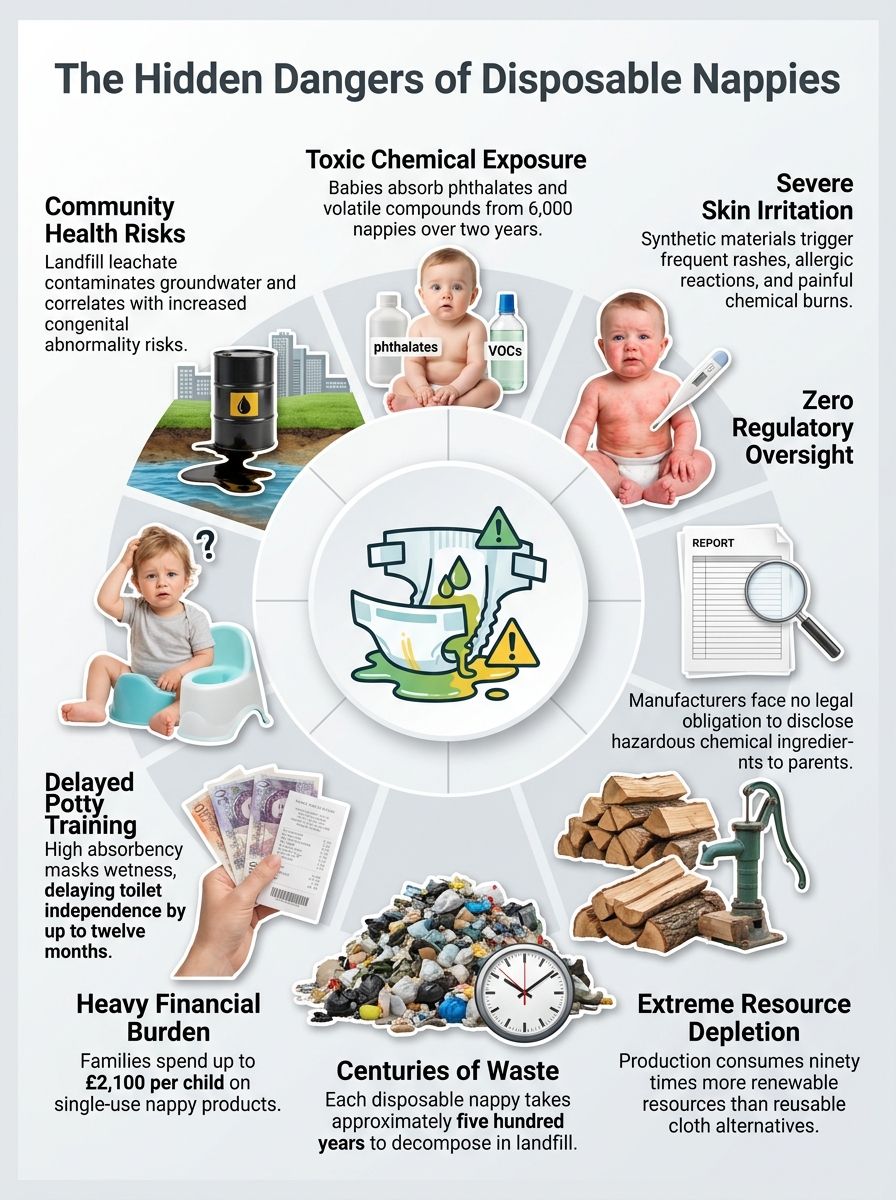
 Disposable nappies may contain hidden substances that manufacturers rarely discuss openly. Your baby's skin touches chemical compounds like phthalates, volatile organic compounds, super-absorbent polymers, and sodium polyacrylate every single day, yet none of these appear clearly on the packaging.The scale of that exposure is worth considering. A baby may use approximately 6,000 disposable nappies over two and a half years. These hazardous chemicals remain largely unregulated by the Consumer Product Safety Commission, and scientists have documented skin irritations, allergic reactions, and contact dermatitis in babies wearing these nappies.Some cases even involved chemical burns and plastic melting onto sensitive skin.This article covers exactly what you need to know about disposable diaper dangers. You will discover which toxic compounds hide inside these products, how chemical exposure affects your baby's health, and what the science says about long-term risks. You will also see the full environmental impact of disposable baby diapers and explore safer alternatives for your family.
Key Takeaways
- Disposable nappies contain unregulated chemicals like phthalates and sodium polyacrylate that trigger skin irritations, allergic reactions, and chemical burns in babies over 2.5 years.
- Babies wear approximately 6,000 disposable nappies, costing families £900 to £2,100, whilst cloth alternatives cost £300 to £600 upfront with £200 to £400 in washing and running costs.
- Manufacturing disposable nappies consumes ninety times more renewable resources and eight times more non-renewable resources compared to cloth nappy alternatives.
- Disposable nappies take approximately 500 years to decompose in landfills, creating persistent environmental contamination through leachate affecting soil and groundwater supplies.
- A 1998 Lancet study linked living near landfills to higher rates of congenital abnormalities like spina bifida and heart defects in newborns.
Popularity of Disposable Diapers
What is the history of disposable diapers?
Pauli Stroe invented the first disposable nappy in Sweden back in 1942. This innovation marked a significant shift in baby care. Disposable nappies did not reach mainstream markets until the 1960s, when manufacturers began producing them commercially.Early versions featured an inner lining built from multiple layers of tissue paper. These designs offered convenience, yet they lacked the absorbency that modern parents expect.Improvements in pulp mill materials transformed the industry significantly. Manufacturers developed more absorbent inner layers and refined the overall design. The chemical composition of these products evolved as engineers incorporated super absorbent polymers and polypropylene into their construction. These materials enhanced performance dramatically.Cost presented a significant barrier to widespread adoption initially. Earlier versions carried relatively expensive price tags compared to cloth alternatives. Over time, manufacturing processes improved and production costs fell. Mass production made disposable nappies more affordable for average households.The technology behind these products involved bleaching agents, dyes, and fragrances that manufacturers added for commercial appeal. Researchers from institutions like the University of Michigan and the National Institutes of Health later examined these chemical components using analytical techniques such as gas chromatography and high-performance liquid chromatography.Their findings revealed concerning substances, including acrylamide, acrylic acid, and various xenobiotics. Disposable nappies have dominated the market for only about forty years, yet their environmental and health impacts continue to raise questions among scientists and health organisations, including the Centers for Disease Control and Prevention.What are the main features and benefits of disposable diapers?
Disposable nappies offer several key features that appeal to parents seeking convenience and comfort. High absorbency levels keep babies dry for longer periods, which reduces the need for frequent changes throughout the day and night.Dry liners sit against the baby's skin to draw moisture away, creating a barrier that helps maintain comfort. The absorbent core locks liquid inside and prevents leaks from escaping onto clothing or bedding.- High absorbency: Keeps babies dry for extended periods, reducing change frequency
- Leak protection: Engineered cores lock liquid away from clothing and bedding
- Range of sizes: Designed to fit newborns through to toddlers
- Sanitary disposal: Parents handle waste without direct contact, reducing bacteria exposure
- Time saving: No washing or drying required compared to reusable nappies
What are the main concerns about disposable diapers?
Parents face mounting concerns about disposable diapers on several fronts. These products damage our planet through massive resource consumption and create mountains of landfill waste that persist for decades.The financial burden of purchasing disposable nappies drains family budgets year after year. The hidden chemicals inside these products, including polyacrylates and potential endocrine disruptors, raise serious questions about what manufacturers actually expose to babies' delicate skin.https://www.youtube.com/watch?v=-AXPHSfTXz8How do disposable diapers impact the environment?
Disposable nappies place enormous strain on our planet's resources. Manufacturing these products consumes ninety times more renewable resources, such as wood pulp, compared to cloth alternatives.They also demand eight times more non-renewable resources, including crude oil, which depletes fossil fuel reserves at an alarming rate. Each baby generates roughly six thousand disposable nappies over two and a half years, creating a mountain of waste that overwhelms landfill sites across the globe.The California Department of Resources Recycling and Recovery has documented how this waste stream continues to expand year after year, straining waste management systems everywhere.- Disposable nappies take hundreds of years to break down in landfills
- Some nations use incineration to manage waste, though this introduces emissions concerns
- Leachate from decomposing nappies can contaminate soil and groundwater
- The Environmental Protection Agency and the Agency for Toxic Substances and Disease Registry have raised formal concerns about these contamination pathways
What are the financial costs associated with disposable diapers?
The cost of raising a child stretches across many years, and nappy expenses form a significant part of that financial burden. Understanding the true price you pay for disposable nappies reveals numbers that impact your household budget in meaningful ways.| Financial Cost Factor | Details |
|---|---|
| Total Nappies Used Over 2.5 Years | A baby requires approximately 6,000 disposable nappies during the first 2.5 years of life |
| Average Cost Per Nappy | Disposable nappies typically cost between £0.15 to £0.35 per unit, depending on brand and quality |
| Total Expenditure for Disposable Nappies | Parents spend roughly £900 to £2,100 on disposable nappies over the 2.5-year period |
| Cloth Nappy Investment | Only 25 to 50 cloth nappies are needed for the same 2.5-year duration |
| Cloth Nappy Initial Cost | A full set of cloth nappies costs between £300 to £600 upfront |
| Additional Cloth Nappy Expenses | Washing costs, detergent, and electricity add £200 to £400 over 2.5 years |
| Net Savings with Cloth Nappies | Families can save £300 to £1,500 by switching to cloth alternatives |
| Premium Brand Disposable Nappies | Eco-friendly or premium disposable options cost £0.40 to £0.60 per nappy, raising total costs to £2,400 to £3,600 |
| Bulk Purchase Discounts | Buying in larger quantities reduces per-nappy costs by 10 to 20 percent |
| Monthly Nappy Budget | Most families allocate £30 to £70 monthly for disposable nappy purchases |
What health risks do disposable diapers pose to babies?
Disposable nappies expose your baby's skin to chemicals that can trigger allergic reactions and skin irritations. Research from the National Toxicology Program and environmental science studies reveals that manufacturers use substances like benzene and n-heptane in production, yet government regulation remains minimal and independent testing stays sparse.https://www.youtube.com/watch?v=HKPEo9UglYcCan disposable diapers cause skin irritations or allergic reactions in babies?
Babies wearing disposable nappies experience skin irritations far more often than those in cloth alternatives. Research shows that nappy rash, allergic reactions, and various dermatological concerns occur at higher rates with disposable products.Parents report chemical burns, plastic melting onto delicate skin, and ink stains marking their infants' bodies. These incidents happen because manufacturers use numerous synthetic chemicals and materials in disposable nappies, including compounds that trigger allergenic reactions in sensitive babies.The National Institutes of Environmental Health Sciences has documented cases where infants developed severe rashes within days of switching to certain disposable brands. Baby wipes, often used alongside nappies, contain additional irritants that compound skin problems.- Nappy rash and contact dermatitis from synthetic chemical ingredients
- Allergic reactions to fragrances, dyes, and plastic polymers
- Chemical burns from prolonged skin contact with certain compounds
- Ink stains and plastic residue on sensitive skin
Why is there a lack of government regulation and independent testing of disposable diapers?
Disposable nappies fall into a regulatory gap that leaves parents in the dark. Governments have not classified these products as medical devices or heavily regulated consumer goods, which means manufacturers face no legal obligation to disclose which chemicals they use.According to 2026 reporting by the Los Angeles Times and advocacy by the Environmental Working Group, there is a specific jurisdictional loophole in the United States. The FDA does not classify diapers as medical devices, and the Consumer Product Safety Commission only requires testing them for lead. Every other chemical ingredient falls entirely outside mandated oversight. To close this gap, California introduced Assembly Bill 1901 in 2026, which would force manufacturers to fully disclose all hidden ingredients and plastics.The absence of mandatory testing requirements means no independent laboratory must verify the safety of materials before companies sell nappies to families. Research published in journals like Environmental Science and Technology has highlighted this troubling oversight. Manufacturers can add various substances without transparency or accountability.This situation means companies effectively control their own safety standards. Independent testing does not happen as a requirement, so manufacturers are not obliged to reveal chemical content to consumers or regulators.The WebMD and National Library of Medicine resources document how this gap affects public health awareness, yet policymakers have not fully closed the loophole. Studies referenced in Reproductive Toxicology journals raise concerns about certain compounds found in nappies. Without mandatory disclosure rules, parents simply cannot make fully informed choices about what touches their child's skin each day.What are the long-term effects of disposable diapers on babies' skin?
Scientists face a significant challenge when studying disposable nappy chemicals over time. Babies wear these products for approximately two and a half years continuously. The prolonged contact between chemical compounds and delicate skin remains largely unexplored in medical literature.Researchers have not conducted sufficient longitudinal studies to evaluate chronic exposure risks for infants during this critical developmental period. This knowledge gap means parents lack clear evidence about what happens to their child's skin after years of chemical contact.According to a late 2023 independent consumer investigation by Mamavation, which used an EPA-certified laboratory to test 40 diaper brands, 17% of disposable diapers showed indications of toxic PFAS, commonly known as “forever chemicals.” These chemicals are linked to developmental issues and accumulate in the body over time, making this finding particularly concerning during a baby's most vulnerable years.- PFAS chemicals resist natural breakdown and build up in the body over months and years
- Babies' skin absorbs substances more readily than adult skin
- Babies have a less developed protective skin barrier
- Long-term dermatological and immune outcomes remain poorly studied
How do disposable diapers affect potty training in toddlers?
Disposable nappies create a significant barrier to successful potty training. The highly absorbent nature of these products prevents babies from feeling wetness, which removes a crucial sensory signal that drives toilet learning.Research published in environmental science and technology journals demonstrates that children using disposable nappies experience delayed potty training compared to those using cloth alternatives. Studies suggest this delay can span six to twelve months, which extends the nappy-wearing period considerably.This delay occurs because toddlers fail to recognise the connection between their bodily functions and the need to use the toilet. Sergio Radovcic and other researchers have examined how moisture-wicking materials in disposable products interfere with these natural developmental cues.- Toddlers do not experience discomfort from wetness, so they lack motivation to progress
- Extended nappy use adds six to twelve months of additional purchasing costs to the family budget
- Cloth nappy users report faster transitions to toilet independence
- Longer dependency on disposables increases landfill contributions substantially
What risks do disposable diapers pose to mothers?
Mothers face real concerns about disposable nappies. From mounting landfill waste that affects our planet's future to emerging research linking certain chemicals to potential developmental risks, the evidence warrants a closer look at what the science reveals about your family's health.What are the environmental concerns related to disposable diapers?
Disposable diapers consume vast natural resources and remain in landfills for centuries. The full scope of this environmental impact deserves serious attention from every family that uses these products.How much resources are consumed in making disposable diapers?
Manufacturing disposable nappies demands staggering amounts of raw materials and energy, far exceeding what sustainable alternatives require. The resource consumption tells a sobering story about modern parenting choices.| Resource Type | Consumption Comparison | Key Details |
|---|---|---|
| Renewable Resources | 90 times higher than cloth alternatives | Wood pulp, cotton fibres, and plant-based materials drain natural reserves at alarming rates |
| Non-Renewable Resources | 8 times more than reusable nappies | Petroleum, plastics, and synthetic polymers deplete finite fossil fuel supplies |
| Water Usage | Substantial consumption in pulp production | Manufacturing processes require millions of litres for bleaching and processing |
| Energy Requirements | Intensive across production stages | Transportation, manufacturing facilities, and chemical processing consume massive electrical output |
| Chemical Inputs | Multiple synthetic compounds required | Sodium polyacrylate, chlorine bleach, and adhesives add to material demands |
How long do disposable diapers take to decompose in landfills?
Disposable nappies pose a serious threat to our planet due to their extraordinarily long breakdown period in landfill sites.| Decomposition Timeline | Key Information |
|---|---|
| Primary Breakdown Period | Disposable nappies require approximately 500 years to decompose in landfills. This timeframe represents a significant environmental burden for future generations. Waste management systems struggle to accommodate such extended decomposition cycles. |
| Uncertainty in Data | The actual breakdown time remains uncertain, but experts believe it spans several centuries. Research continues to reveal the true decomposition rate of these products. Scientists cannot pinpoint an exact figure due to limited historical data and ongoing studies. |
| Environmental Persistence | Nappies contribute to persistent environmental issues because they remain intact for centuries. Landfill capacity decreases as these items occupy valuable space for prolonged periods. The synthetic materials used in nappies resist natural degradation processes significantly. |
| Landfill Impact | Millions of nappies accumulate in waste sites every year without breaking down. Landfill management becomes increasingly challenging as decomposition timelines extend. Waste reduction strategies must address the scale of nappy disposal problems urgently. |
| Material Composition | Nappies contain plastics, absorbent materials, and chemical compounds that resist decomposition. Plastic components require centuries to break apart into smaller fragments. These elements persist in soil and groundwater long after disposal. |
Conclusion
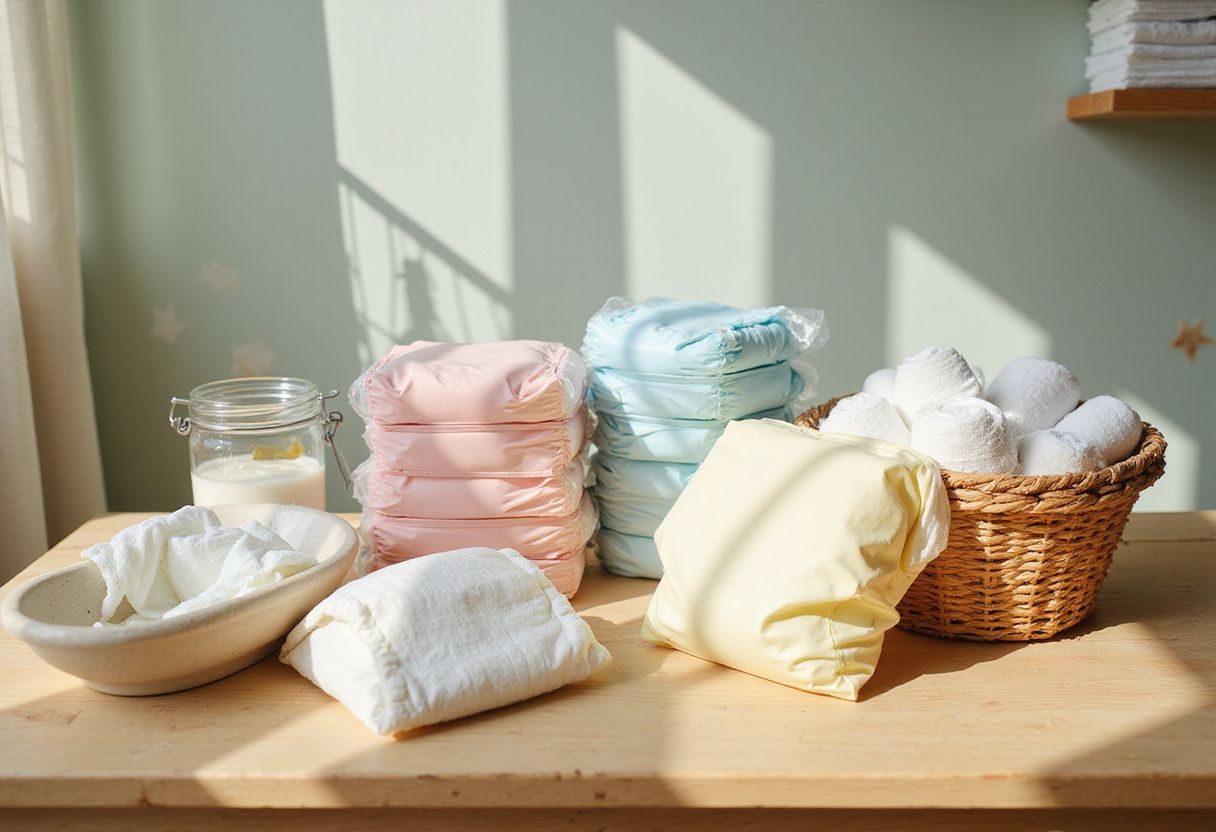
Parents face a genuine dilemma when choosing nappies for their babies. Research shows that conventional disposable nappies contain chemicals that lack proper government oversight, whilst they also take roughly 500 years to break down in landfills.Your child's skin may develop rashes, allergic reactions, or chemical burns from prolonged contact with these products. Studies also link them to respiratory issues and delayed potty training.Cloth nappies present a viable alternative, consuming far fewer resources and avoiding many of the harmful substances found in disposable versions. Making an informed choice about which nappy type suits your family best means weighing convenience against your child's health and our planet's future.FAQs
1. Are disposable nappies really dangerous for babies?
Some disposable nappies do contain chemicals that can irritate a baby's sensitive skin. A 2023 study published in Environmental Science & Technology detected volatile organic compounds in several popular US nappy brands, though most modern nappies meet safety standards.2. What harmful chemicals are found in disposable nappies?
Research indexed by the National Library of Medicine has identified trace amounts of dioxins, phthalates, and volatile organic compounds in some disposable nappy brands. These substances can cause skin irritation in sensitive babies.3. Can these chemicals affect a baby's long-term health?
Prolonged exposure to phthalates has been linked to hormone disruption in children, according to Environmental Science & Technology research. Most experts recommend choosing nappies with transparent ingredient testing to minimise potential risks.4. How can parents reduce the risks linked to disposable nappies?
Look for nappies certified by the OEKO-TEX Standard 100, which tests for harmful substances. Change nappies frequently, and choose brands that publicly disclose their chemical testing results on their packaging or websites.As authors of this article, we think you may also find our article about the Diaper Debate interesting here.
[Published September 2014.]