Waste segregation provides significant environmental, economic, and health benefits by separating waste into categories like wet, dry, and hazardous. It boosts recycling rates, reduces reliance on landfills, lowers greenhouse gas emissions, and improves safety by managing contaminants. It also saves money, but we cannot explain it all here, so read on to save money!
Waste Segregation In a Nutshell
- Waste segregation is the act of sorting your waste into organic, recyclable, and hazardous categories at the point of generation. It is one of the most effective habits you can develop.
- Correct waste separation can directly reduce methane emissions from landfills, protect our drinking water, and conserve natural resources through recycling.
- Businesses that segregate waste properly can significantly reduce disposal costs and even generate income from recyclable materials such as metal, paper, and plastic.
- In England, the Simpler Recycling regulations (2024) now legally require most businesses to separate key waste streams. Failure to comply can lead to serious consequences.
- Continue reading to learn exactly which waste categories need to be separated, what the law says, and how to create a system that works whether you're at home or running a business.
Waste Segregation Is One of the Easiest Ways to Help Save the Planet
Most environmental issues seem huge and distant. Waste segregation is something you can start doing right now, today, with a labelled bin and five minutes of your time.
It’s easy to feel overwhelmed by the sheer magnitude of the world’s waste problem. Landfills are growing, our oceans are becoming choked with plastic, and dangerous chemicals are seeping into our groundwater all over the planet. But the answer starts at the simplest level: sorting your trash before it ever gets to a disposal facility. When waste is properly separated at the source, every step that follows in the waste management process becomes quicker, less costly, and more efficient.
Banyan Nation, a company specialising in material recovery and recycling, provides comprehensive guidance on waste segregation practices that contribute to a circular economy. This is a type of resource loop in which materials are recovered, reused, and kept out of landfills for as long as possible. The advantages of doing this correctly go far beyond neater bins. They impact public health, economic efficiency, legal compliance, and long-term environmental sustainability.
Understanding Waste Segregation
Waste segregation involves sorting and separating waste materials into different categories right at the source, or the point of generation. This means that waste is separated before it is collected, disposed of, or mixed with other types of waste that may be incompatible.
What is Waste Segregation? Waste segregation is the process of sorting waste into different categories like organic or wet waste, dry or recyclable waste, and hazardous waste. This process is done at the source of the waste, whether that be a home, workplace, or facility, to ensure that the waste is disposed of or recovered in a safe, efficient, and environmentally-friendly way.
But, waste segregation is not just about keeping things organised. It’s about determining what waste can be recovered and reused, what waste needs to be treated before it’s disposed of, and what waste could potentially harm humans or the environment if it’s not handled properly. Getting this sorting process right as early as possible is what makes the entire waste management system function properly.
Three Key Categories: Organic, Recyclable, and Hazardous Waste
Although waste classification systems can be quite complex depending on the industry or regulatory context, there are three key categories that provide the basis for effective segregation in both homes and businesses. For example, understanding the inert waste acceptance criteria can be crucial in determining how to properly categorize and dispose of waste materials.
- Wet or Organic Waste: This includes food scraps, garden waste, and other biodegradable materials. These can be composted or processed through anaerobic digestion to create energy and nutrient-rich compost.
- Dry or Recyclable Waste: This includes paper, cardboard, glass, metals, and most plastics. When these materials are clean and properly sorted, they can be reused in manufacturing supply chains, eliminating the need for new raw materials.
- Hazardous Waste: This includes batteries, chemicals, solvents, medical waste, fluorescent bulbs, and electronic waste (e-waste). These materials require special handling and storage to prevent toxic contamination of the air, soil, and water.
Some systems also include a fourth category — general or residual waste — for materials that don't fit into the above groups and can't be recovered. The smaller this pile of residual waste, the more effective your segregation system is.
The Trouble with Mixing Different Types of Waste
Throwing various waste streams together can lead to significant issues throughout the whole management chain. For example, one batch of recyclables that has been contaminated, such as a greasy pizza box mixed in with clean cardboard, can make the entire load non-recyclable. As a result, it will be sent directly to the landfill.
When it comes to hazardous waste, the issue becomes even more critical. Waste workers can be unknowingly exposed to toxic substances when batteries, paint, and chemical containers are mixed with regular trash. In landfill settings, these chemicals can seep through the soil and into groundwater, sometimes traveling for miles before polluting a water source. The mixing of waste is not just an inefficiency — it poses a real threat to public health and the environment.
How Waste Segregation Helps the Environment
There's no denying that waste segregation makes a significant difference in the health of our planet, and this is true whether you're looking at a single compost bin in someone's backyard or the recycling infrastructure of an entire country. When waste is properly sorted, it eases the strain on our landfills, reduces the amount of greenhouse gases we produce, safeguards our ecosystems, and helps us conserve the natural resources that we have a limited amount of. Each type of waste, when managed properly, brings with it its own unique environmental benefits.
How Sorting Trash Cuts Down on Landfill Waste and Methane Emissions
Landfills rank as some of the biggest man-made contributors to methane — a greenhouse gas that, over two decades, has a warming potential about 80 times that of CO₂, says the US Environmental Defense Fund. The main cause of this methane production is organic waste: food leftovers and biodegradable matter that decompose anaerobically (without oxygen) after being covered by layers of assorted trash. To understand more about the process and impact of landfill gas, it's important to explore how waste management strategies can mitigate these emissions.
By separating organic waste and composting it or processing it through anaerobic digestion facilities, we can either capture the methane as usable biogas or avoid it entirely. At the same time, segregating recyclables reduces the amount of material that needs to be landfilled — reducing the physical volume of waste that sites must absorb and significantly extending their operational lifespan.
How Recycling Helps Preserve Natural Resources
For every ton of material we manage to recycle, that's one less ton of raw material that we have to take from the earth. When you add up all the different types of materials we use, that's a big deal for the environment.
- Aluminium: The energy required to recycle aluminium is approximately 95% less than what is needed to produce it from raw bauxite ore.
- Paper: By recycling one tonne of paper, we can save around 17 trees and decrease water usage by up to 50% compared to the production of virgin paper.
- Glass: Recycled glass (cullet) melts at a lower temperature than raw materials, which decreases the energy demand of furnaces with every percentage of cullet used.
- Plastic: When we recycle plastic, we decrease our dependence on petroleum extraction and reduce the energy required for production compared to manufacturing from new resin.
However, these benefits can only be achieved if we have clean, correctly sorted recyclable waste at the beginning of the process. Contamination, which is caused by mixing waste streams, is the biggest obstacle to effective material recovery. Segregation is the key to unlocking the resource value that would otherwise be buried.
Aside from energy conservation, minimizing extraction processes safeguards the environment, including natural landscapes, biodiversity, and water systems, from the environmental damage caused by mining, drilling, and logging. The impact of a sorted recycling bin is truly far-reaching.
Protecting Soil and Water through Hazardous Waste Segregation
When hazardous materials are dumped into the general waste stream without being separated, they don’t just vanish. Heavy metals such as lead, mercury, and cadmium from batteries and electronics build up in soil over time. This disrupts the microbial ecosystems that plants rely on and enters the food chain through crops grown in contaminated soil.
When solvents, paints, and cleaning products reach a landfill, the chemicals they contain can seep through the soil as leachate — a poisonous liquid that can contaminate underground aquifers and surface water systems. Regulations like the UK's Non-hazardous Waste Regulations govern proper hazardous waste segregation. This ensures that these materials are stored, transported, and treated by licensed facilities that can neutralise or safely contain their risks.
How Separating Your Trash Can Improve Public Health
There’s no doubt about it: the way we handle our trash has a big impact on public health. When we don’t manage our waste properly, we create conditions that allow diseases to spread, toxins to build up, and disadvantaged communities to suffer. One of the best ways to prevent these problems is by separating our waste before it becomes a problem.
The Danger of Hazardous Chemicals in Landfills Polluting Drinking Water
When hazardous waste is put into a landfill that contains all kinds of waste, it doesn't stay put. The rain that falls on the landfill soaks through the layers of waste, picking up dissolved chemicals, heavy metals, and biological contaminants along the way. This contaminated liquid, or leachate, can break through the liner systems that are supposed to contain it — especially in older landfills — and get into the soil and groundwater around the landfill. Communities that get their drinking water from wells or shallow aquifers near a landfill can be exposed to substances like benzene, arsenic, and chlorinated solvents. These substances have been linked to serious health problems like cancer, damage to the nervous system, and developmental disorders in children.
Safe Waste Storage Can Decrease Bacteria and Vermin
When organic and general waste are mixed together, bacteria, mould, and the pests that carry them thrive. Rats, flies, and cockroaches aren’t just gross — they carry diseases like salmonella, leptospirosis, and hantavirus. By separating food waste into a dedicated organic bin with a sealed lid, the conditions that attract and sustain vermin populations are disrupted at the source.
Places where food is prepared and served – such as restaurants, food processing plants, school cafeterias, and hospitals – are at the greatest risk, but homes are also vulnerable. Just by separating wet organic waste from dry general waste and keeping them in clearly marked containers with secure lids, you can significantly reduce the number of microbes in waste storage areas and the health risks they pose. This minor operational adjustment can greatly improve public health.
Financial Advantages Businesses Shouldn't Overlook
Environmental responsibility and financial performance are not competing priorities when it comes to waste segregation — they move in the same direction. Companies that introduce effective waste sorting systems consistently discover that the initial investment in bins, signage, and staff training is offset by lower disposal costs and, in many instances, direct revenue from recovered materials.
Landfill disposal is not only costly, but the price is also steadily rising. In the UK, the standard landfill tax rate for active waste was £103.70 per tonne in 2023/24, and it is expected to continue to rise. Every tonne of material that is recycled or composted instead of being sent to a landfill is a tonne that is not subject to this tax. This can lead to substantial savings for businesses that produce a large amount of waste, such as manufacturers, retailers, hospitality operators, and construction firms.
Another consideration is the cost of waste collection contracts. Mixed waste collections usually come with higher fees than source-separated streams, as the materials need more processing before they can be disposed of or recovered. Businesses that provide their waste contractor with clean, segregated waste streams often manage to negotiate lower collection rates as a direct result.
Segregation doesn't just reduce costs, it also turns what was once a liability into an asset. Recyclable materials, especially metals, some plastics, and cardboard, have market value. Waste contractors or material recovery facilities will sometimes pay for clean, separated loads of high-value materials instead of charging for their collection.
- Less landfill tax: For each tonne that is diverted from landfill, the standard rate of £103.70 per tonne (2023/24 UK rate) is avoided.
- Reduced contract costs for collection: Clean segregated streams are cheaper to collect and process than mixed waste loads.
- Income from recyclables: Metals, cardboard, and certain plastics can generate income instead of disposal fees.
- Penalties for compliance avoided: Proper segregation keeps businesses compliant with regulations, avoiding fines and legal costs.
- Better ESG credentials: Demonstrable waste reduction supports Environmental, Social, and Governance reporting — which is increasingly important for contracts, investment, and consumer trust.
Lower Disposal Costs Through Less Landfill Use
UK Landfill Tax Rates (2024/25):
Standard rate (active waste): £130.75 per tonne
Lower rate (inactive/inert waste): £8.65 per tonne
Source: UK Government, HMRC — rates confirmed for the 2026/27 financial year.
The financial case for segregation is clear from these figures. A medium-sized business sending 50 tonnes of mixed waste to landfill per year would face a tax liability of over £6,300 at the standard rate — and that's before collection, transport, and gate fees are added. Diverting even half of that volume through recycling and composting would significantly reduce that bill.
The savings are most significant in sectors with high organic waste volumes, such as food service and hospitality, where a large proportion of total waste weight is wet organic material that can be composted or sent to anaerobic digestion facilities at a fraction of the cost of landfill disposal. Some local authorities and private operators collect food waste for free or at very low cost when it is cleanly separated, because the material has energy recovery value.
Construction and demolition companies see the most benefit from segregating heavy inert materials such as concrete, bricks, and soil, which are eligible for the lower landfill tax rate of £8.65 per tonne when separated — a saving of over £132 per tonne compared to mixed active waste disposal. The difference between a segregated and a mixed skip load can amount to thousands of pounds on a single project. For more insights, you can explore the importance of waste segregation in construction projects.
Profit From Recyclables Like Paper, Metal, and Plastic
Recyclables that are clean and separated at the source are valuable. Scrap metal — especially aluminium and copper — is always in demand and fetches a steady price on the market. A company that separates its aluminium cans, copper wire scraps, or steel parts from regular trash can arrange for a scrap dealer to pick them up and pay by weight instead of charging for disposal. Paper and cardboard bales, as long as they're clean and dry, can also be sold to paper mills and material recovery facilities.
The operative term here is clean. Contamination — food residue on cardboard, mixed plastics in a metals load, wet paper — ruins the market value of materials that could have been recovered. That's why the practical steps of segregation are so important: rinsing containers, keeping recyclable storage areas dry, and never mixing streams aren't just administrative details; they're what decides whether your waste is an asset or a liability.
Legal Requirements for Waste Segregation
Waste segregation is no longer a suggested best practice. In the UK and throughout the European Union, it is increasingly becoming a legal requirement — and the trend in regulations is consistently towards stricter rules, wider scope, and steeper fines for non-compliance. Being aware of the legal framework isn't a choice for businesses; it's a fundamental requirement for legal operation.
The Environmental Protection Act 1990 is the cornerstone of waste law in the UK, and it outlines the duty of care for anyone who generates, handles, or disposes of waste. This duty mandates that waste is safely stored, accurately described, and only transferred to authorised carriers and facilities. Non-compliance can lead to unlimited fines and, in severe cases, criminal prosecution. Waste segregation is key to fulfilling this duty because correctly classifying waste is the initial step in ensuring it ends up at the right facility.
The Waste Separation Regulations of England 2024
Under the Environment Act 2021, the Simpler Recycling reforms were introduced, and they were implemented through updated regulations. These require businesses, schools, and other non-household premises in England to present key waste streams separately for collection from March 2025. The mandated streams include food waste, dry recyclables (paper, cardboard, glass, metals, and plastics), and residual waste. Businesses with ten or more employees were the first to be brought into scope, followed by smaller businesses. This is the most significant change to business waste requirements in England in over a decade, making source segregation a legal obligation rather than a recommendation for the vast majority of commercial premises.
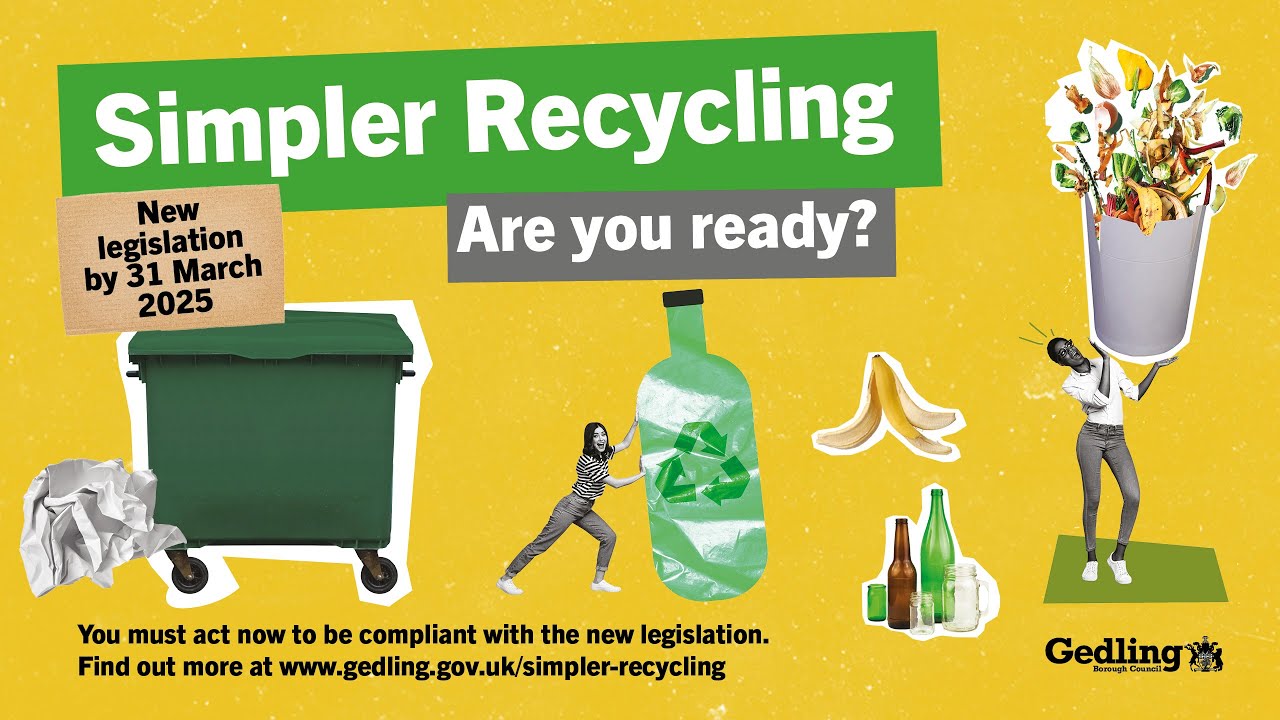
“Simpler recycling – everything you need …” from www.youtube.com and used with no modifications.
Business Guidelines for Hazardous Waste Disposal
- Identification: Businesses are required to accurately identify whether their waste is hazardous by using the European Waste Catalogue (EWC) codes and the Hazardous Waste Regulations 2005 (England, Scotland, Wales).
- Separation: Hazardous waste should be kept separate from non-hazardous waste at all times during storage and transport.
- Storage: Hazardous waste should be stored in suitable, marked containers in a secure area with bunding (containment) to prevent spillage from reaching drains or soil.
- Consignment notes: Every movement of hazardous waste should be accompanied by a consignment note, which tracks the waste from producer to licensed disposal facility.
- Licensed carriers only: Hazardous waste should only be collected and transported by carriers registered with the Environment Agency.
Businesses that produce more than 500kg of hazardous waste per year were previously required to register as hazardous waste producers in England, though this requirement was removed in 2016. However, the duty to use consignment notes and licensed carriers remains fully in force regardless of volume produced.
There are serious repercussions for not properly complying with hazardous waste regulations. The Environment Agency has the authority to issue fixed penalty notices, enforce remediation orders (which require businesses to pay for the cleanup of contamination they caused), and refer cases for criminal prosecution. Company directors can be held personally responsible if it is proven that offences occurred with their consent or due to their negligence. For businesses looking to understand more about waste management practices, exploring UK solid waste management companies might provide valuable insights.
Apart from the legal implications, the reputation of a business can be severely damaged by hazardous waste incidents. A chemical spill, contamination of a site, or a lawsuit can be enough to end a business, especially in sectors where environmental standards are important to clients, insurers, or regulatory bodies.
Waste Hierarchy: The Order of Priority is Prevent, Reuse, Recycle, and Dispose
Waste laws in the UK and EU are based on the waste hierarchy, a five-step system that prioritises waste management options based on their environmental impact. Prevention is the most preferred option (reducing waste production), followed by reuse, then recycling, then other forms of recovery (like energy-from-waste), and finally disposal, which is the least preferred option. Businesses are legally obligated to follow the waste hierarchy and may be asked to show how their waste management practices align with it.
Waste segregation is the hands-on method that enables the hierarchy to function. Without dividing materials at the source, it's impossible to direct organic waste to composting, recyclables to material recovery, or hazardous waste to specialist treatment. Segregation isn't an isolated practice — it's the operational bedrock on which every higher-level waste management outcome relies.
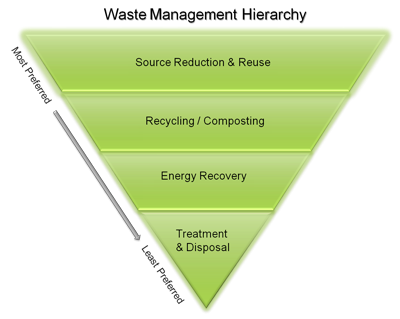
“Waste Management Hierarchy …” from www.epa.gov and used with no modifications.
How to Properly Separate Waste at Home or in the Office
Implementing a successful waste separation system doesn’t need to involve costly equipment or intricate procedures. All it needs is a well-defined structure, regular habits, and a sufficient grasp of the categories to make informed decisions when an unusual situation arises. Whether you’re sorting waste in a home kitchen or overseeing a multi-location business operation, the basic principles remain the same.
1. Use Clearly Labelled Bins for Each Waste Type
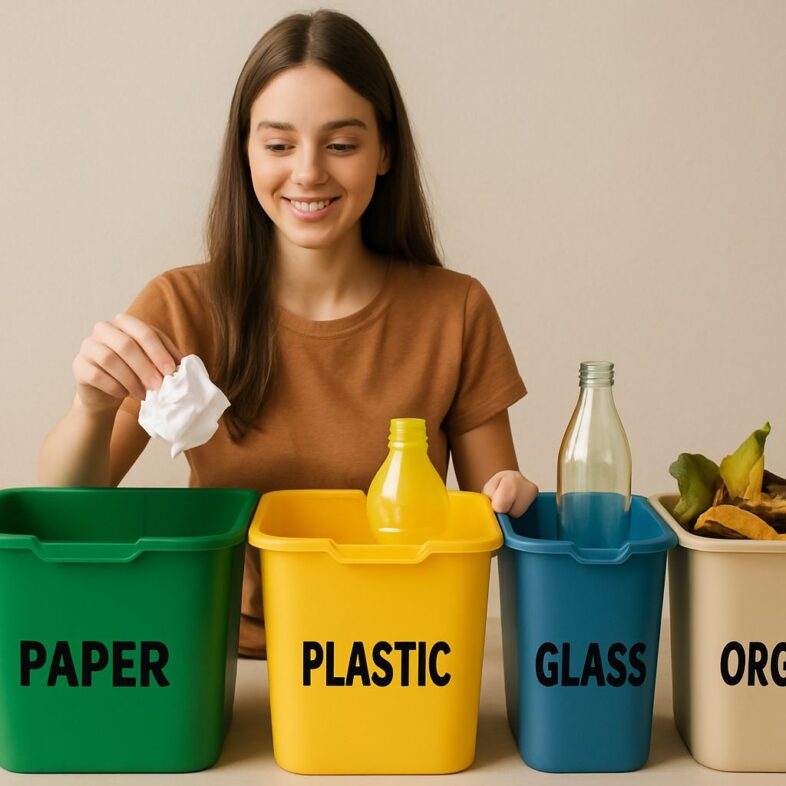
The most effective way to ensure proper waste segregation is to make it easy for people to choose the correct bin. You can do this by placing clearly labelled, colour-coded bins everywhere waste is generated. This includes the kitchen, workstations, bathrooms, and storage areas. Many settings use colour coding to make it easier to identify the type of waste. For example, green or brown is often used for organic/food waste, blue for paper and cardboard, yellow for mixed dry recyclables, red for hazardous materials, and black or grey for general residual waste. If you match your bin colours to your local authority or contractor's collection system, it will avoid confusion at the collection point.
It's better to be specific rather than general with your labels. A bin that says “only food waste — no packaging” is more effective than one that just says “organic.” In places like offices, putting laminated picture guides above bins that show exactly what goes in and what doesn't can really help lower contamination rates. This is especially true in places where there are a lot of new employees or people who speak different languages. For more information on effective waste management strategies, you can explore various separation and sorting technologies.
2. Keep Your Recyclables Clean and Dry
Contamination is the worst enemy of recycling. If a recyclable material is dirty, wet, or mixed with incompatible waste, it loses its market value and is often thrown into a landfill despite being technically recyclable. Rinsing food containers before putting them in the recycling bin takes only a few seconds and can mean the difference between a material that is recovered and one that contaminates an entire batch. Cardboard boxes that have been flattened and kept dry are much more valuable to paper mills than soggy, food-stained ones. Simple habits like shaking out excess liquid, replacing lids on containers, and keeping recycling storage areas covered can help protect the quality of what you are collecting and ensure that it is actually recycled instead of being rejected at the processing facility.
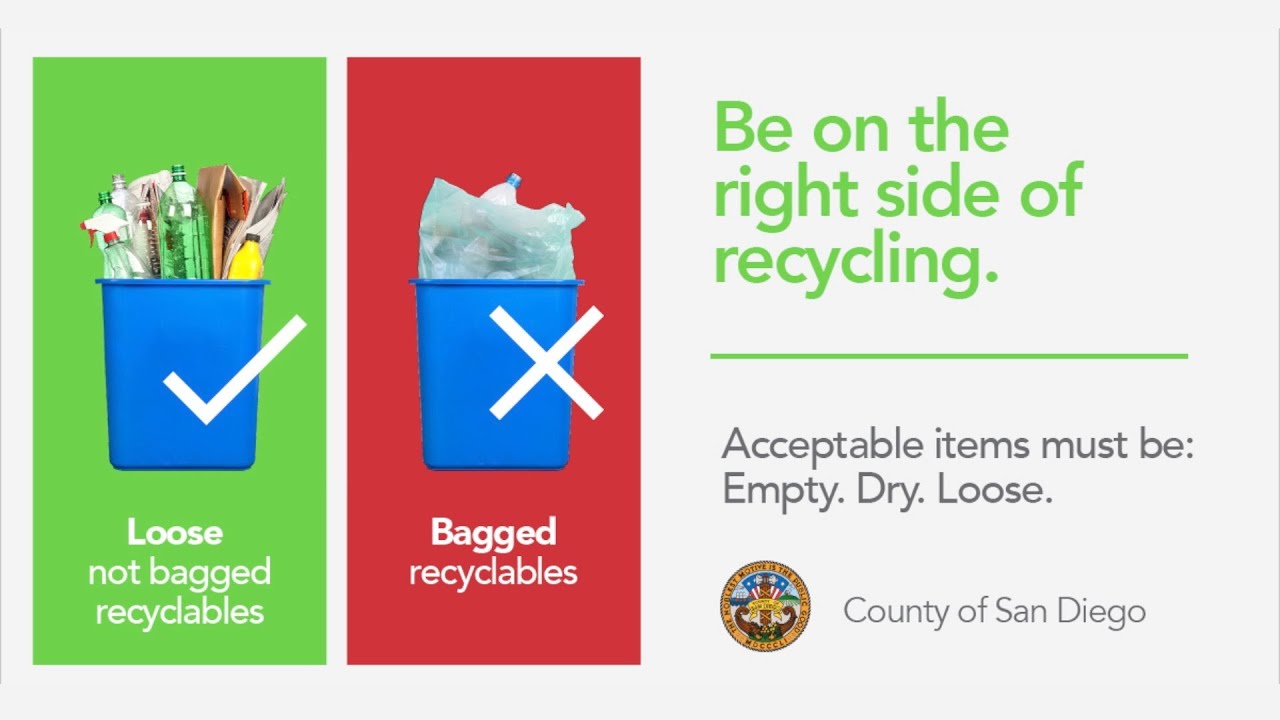
“The Right Way to Recycle – Empty, Dry …” from www.youtube.com and used with no modifications.
3. Never Combine Hazardous Waste With Regular Trash
When hazardous waste is combined with regular trash, it poses a threat that follows the bag – to the waste collector who handles it, to the facility that processes it, and potentially to the environment if it ends up in an inappropriate disposal location. Batteries are one of the most commonly misplaced hazardous items: they are small, appear harmless, and blend in with other trash. However, lithium batteries in particular are a well-known fire hazard in waste vehicles and recycling facilities, with numerous incidents reported throughout the UK. They should be placed in a designated battery collection area, not in a regular trash bag.
It’s important to create a designated spot for hazardous waste collection, which should be a secure, sealed container in a specific location. There should also be a regular schedule for a licensed hazardous waste carrier to collect its contents. For workplaces, this should be documented and communicated to all staff as part of induction. For homes, most local authorities operate hazardous household waste collection sites, and many supermarkets provide battery and small electricals drop-off points free of charge. The infrastructure is there — it’s just a matter of using it correctly and developing the habit.
4. Teach Those Around You
A waste segregation system is only as good as the least knowledgeable person using it. In a family, this might mean explaining to children which bin to use and why — tying the action to a tangible result like saving marine life from plastic makes the habit much more memorable than just a rule. In an office, it means structured orientation for new employees, clear signs that eliminate confusion, and regular reminders when contamination levels increase or rules change.
Education at the community level further enhances the impact. Neighbourhoods where residents are aware and consistently practice segregation have less contamination in their recycling collections, better compost quality from organic streams, and stronger ties with local waste management services. If you're in a position to share what you know – as a team leader, a parent, a community organiser, or just a neighbour – that knowledge transfer is one of the most effective things you can do for local environmental outcomes. Systems don't change on their own; people who understand why they're important change them. Learn more about separation and sorting technology to enhance your understanding.
Every Little Bit Helps
Waste segregation isn’t just an abstract concept. Its benefits can be seen in the reduction of methane emissions from landfills, the prevention of drinking water contamination, the preservation of forests that would otherwise be cut down for paper production, the decrease in business operating expenses, and the alleviation of environmental burdens on communities. All of these results stem from the simple act of choosing the right bin for your waste.
The beauty of waste segregation as an environmental act is its scalability. A single household that sorts correctly contributes to a cleaner material recovery stream. A business that implements a proper system diverts tonnes of waste from landfill annually. A community that takes it seriously transforms what is possible at the collection and processing level. Each layer of participation amplifies the one below it, and none of it requires waiting for technology, policy, or infrastructure to catch up — the tools are already in your hands.
The most crucial change is viewing waste not as something to eliminate, but as a group of resources that each has a suitable place. Organic matter is valuable as compost and biogas. Metals, paper, and plastics are valuable as substitutes for raw materials. Even hazardous waste, if managed properly, can be treated safely instead of becoming a long-term environmental risk. Segregation is the first step in recognising and acting on this value — and it begins the moment you decide where to put something. For more insights, explore the latest separation and sorting technology that enhances waste management processes.
Common Questions and Answers
We’ve compiled responses to the most frequently asked questions about waste segregation, including its categories, environmental effects, legal necessities, and practical advice for households and businesses.
What Are the Main Types of Waste in Waste Segregation?
Waste segregation is built around three primary categories, each requiring a different disposal or recovery pathway. Understanding which category a material belongs to is the foundation of any effective segregation system. For more insights, explore the importance of waste segregation and its impact on the environment.
Organic/wet waste is composed of food scraps, fruit and vegetable peelings, garden waste, and other biodegradable materials. When this type of waste is properly sorted, it can be composted to produce a nutrient-rich soil conditioner or it can be processed through anaerobic digestion to create biogas, a renewable energy source. It's important to keep this waste stream free from plastic packaging and non-organic contaminants in order for both the composting and energy recovery processes to work efficiently.
Dry/recyclable waste includes paper, cardboard, glass bottles and jars, metal cans and tins, aluminium foil, and most rigid plastics. The ability to recycle individual plastic types varies — you can find the resin identification code on packaging and see what your local collector accepts. The main rule for this stream is that materials must be clean and dry; contamination by food residue or moisture downgrades the entire batch.
Hazardous waste includes batteries, fluorescent and LED bulbs, electronic waste (e-waste), paint, solvents, pesticides, motor oil, and medical sharps. It is crucial that these items never mix with general waste and must be disposed of through licensed channels — designated collection points, hazardous household waste sites, or licensed hazardous waste carriers for business volumes.
| Waste Category | Examples | Correct Disposal Route |
|---|---|---|
| Organic / Wet Waste | Food scraps, garden clippings, coffee grounds | Home composting, food waste collection, anaerobic digestion |
| Dry / Recyclable Waste | Cardboard, glass jars, aluminium cans, plastic bottles | Kerbside recycling collection, recycling centres |
| Hazardous Waste | Batteries, paint, solvents, e-waste, fluorescent bulbs | Licensed hazardous waste facilities, supermarket drop-off points |
| General / Residual Waste | Contaminated packaging, non-recyclable plastics, hygiene products | General waste collection (landfill or energy-from-waste) |
Why Is Waste Segregation Important for the Environment?
- It reduces the volume of waste sent to landfill, directly cutting methane emissions — a greenhouse gas with approximately 80 times the warming power of CO₂ over 20 years.
- It enables recycling, which conserves raw materials and the energy required to extract and process them — recycling aluminium, for example, uses around 95% less energy than producing it from ore.
- It prevents hazardous materials from contaminating soil and groundwater, protecting ecosystems and drinking water sources from toxic leachate.
- It supports the circular economy by keeping materials in productive use for longer, reducing the environmental footprint of manufacturing.
- It protects biodiversity by reducing the need for resource extraction — mining, drilling, and logging — that destroys natural habitats.
The environmental importance of waste segregation sits at the intersection of climate action, resource conservation, and ecosystem protection. It is not a single-issue solution — it contributes simultaneously to reducing greenhouse gas emissions, cutting pollution, preserving habitats, and conserving energy. Few individual actions deliver environmental benefits across this many dimensions at once.
Landfills are a huge environmental problem. They produce methane, use up a lot of land, create toxic leachate that needs to be managed, and waste the material value of the waste they hold. Every ton of material that is diverted to a segregated recycling or composting stream is a ton that doesn't contribute to these problems — and instead, it has a positive impact on the environment.
When we consistently segregate waste, we make a big difference over time. This can change what we're able to do with our infrastructure. For example, when we have a regular supply of clean, high-quality recyclable materials, it makes sense to invest in more recycling processing capacity. When we always separate organic waste, we can expand our composting and anaerobic digestion infrastructure. So, when you segregate your waste, you're helping to drive big environmental changes at a national level. This connection may not always be obvious, but it's definitely there.
How Can Waste Segregation Save Your Business Money?
- Decreases landfill tax liability — currently £130.75 per tonne for active waste in the UK (2024/25 rate).
- Reduces waste collection contract costs, as separated streams are less expensive to process than mixed loads.
- Creates revenue or lower fees from recyclable materials such as metals, cardboard, and some plastics.
- Prevents regulatory fines and potential legal expenses related to non-compliance with waste duty of care responsibilities.
- Enhances ESG reporting credentials, which increasingly impact procurement decisions, access to investment, and insurance terms.
The financial argument for waste segregation is most compelling in sectors with high waste volumes — food service, manufacturing, retail, construction, and healthcare. In these sectors, even small improvements in diversion rates from landfill can result in tens of thousands of pounds in annual savings when landfill tax, collection fees, and material revenues are all considered.
Companies often don't realise how much they're actually spending on inefficient waste management because they view disposal fees as a set expense instead of something that can be controlled. However, a waste audit, which is a thorough examination of what's being thrown away, how much of it there is, and how much it costs, usually shows that there are a lot of chances to save money by segregating waste better and recovering materials. A lot of waste management companies will even do audits for free or for a reduced price as part of their services.
Putting in place improved segregation measures doesn't usually require a lot of investment: just some labelled bins, training for your staff and revised collection contracts. The return on your investment is generally quick, and the ongoing savings keep coming.
With environmental regulations getting tighter and stakeholders paying more attention to sustainability performance, the question is less about whether you should invest in waste segregation and more about how soon you can do it effectively.
What Are the Consequences of Not Separating Hazardous Waste Correctly?
When hazardous waste is not correctly separated, it triggers a domino effect of damage that begins at the disposal site and reaches far beyond. Hazardous materials in landfills can seep toxic substances, such as heavy metals, chlorinated solvents, and persistent organic pollutants, into the surrounding soil and groundwater. This pollution can last for decades, impacting sources of drinking water, agricultural land, and aquatic ecosystems far from where the waste was originally disposed of. Communities near poorly managed landfill sites are at a significantly increased risk of health problems. These include higher rates of certain types of cancer, neurological disorders, and reproductive health problems associated with long-term exposure to toxins.
Companies that fail to comply with hazardous waste regulations face serious and real consequences. The Environment Agency has the authority to issue enforcement notices, fixed penalty notices, and remediation orders that require companies to pay for the cleanup of the contamination they caused. This cost can run into the millions of pounds for major incidents. Criminal prosecution is an option for the most serious violations, with unlimited fines and possible jail time for individuals found personally responsible. In addition to legal and financial risks, a hazardous waste incident such as a spill, a fire caused by improperly stored batteries, or a prosecution can cause reputational damage that can be much more expensive in the long run than the compliance measures that could have prevented it. For more information on the significance of managing waste properly, check out this article on the importance of waste segregation.
Do Businesses in England Have to Legally Segregate Waste?
They do — and the legal requirements have gotten much stricter in recent years. The key legal obligation is the duty of care under the Environmental Protection Act 1990, which applies to every business that produces, handles, or moves waste. This means that waste must be properly described, safely stored, and only moved to authorised carriers and licensed facilities. Waste segregation is a crucial part of fulfilling this duty, because waste has to be correctly classified before it can be legally moved or disposed of.
Under the Environment Act 2021, the Simpler Recycling regulations were put into effect, making it mandatory for businesses in England to separate their waste beginning in March 2025. This law applies to non-residential buildings, such as offices, stores, restaurants, schools, and other commercial establishments, and mandates that food waste, dry recyclables (including paper, cardboard, glass, metal, and plastic), and residual waste be presented separately for collection. Businesses with ten or more employees were the first to be affected by these requirements, and all businesses, regardless of size, will eventually be subject to them. The local authority or Environment Agency may take enforcement action against businesses that fail to comply. For more on the technology behind waste separation, you can explore separation and sorting technology.
Companies that generate hazardous waste must adhere to additional guidelines under the Hazardous Waste Regulations 2005. These regulations mandate the use of consignment notes for all hazardous waste movements, the storage of hazardous waste in properly labelled containers with secondary containment, and the use of only licensed carriers and disposal facilities. These rules apply to the management of hazardous waste regardless of the amount produced — there is no minimum volume threshold below which these rules do not apply. Companies that are unsure of their responsibilities should consult their local Environment Agency office or a licensed waste management consultant.

Best Construction Waste Containers & Disposal Solutions
Rugged moulded plastic bin-style construction waste containers (ranging from 75L to 167L) are the top choice for durability in smaller, high-traffic US construction environments, and RoRo (Roll-on, Roll-off) containers (20–60 yards) are the industry standard for large-scale demolition and heavy waste disposal. A Mini Summary of this Article on Best Construction Waste Containers Choosing the […]
Revolutionizing Waste Recovery: Latest Separation And Sorting Innovations
Waste recovery is changing fast, thanks to new separation and sorting technology. This tech helps us sort trash better, so we can recycle more things. For example, Stadler has built a big plant in Spain for VAERSA that makes recycling easier and smarter. Keson is finding new ways to deal with old tyres, helping both […]

The Circular Economy In Fashion: Making Clothes Sustainable
Fast fashion fills our wardrobes, but most clothes end up in landfills within a year. Introducing the concept of the circular economy in fashion. It's the best hope for making our clothes sustainable. The global clothing industry creates over 92 million tonnes of waste each year, making it one of Earth's biggest polluters. A circular […]
The Evolution of Food Waste Processing Technologies: From Wet to Waterless Biodigesters
Read on for the latest news on the development of wet and waterless biodigesters as a means of processing Food Waste. As food waste management becomes an increasingly pressing issue for environmental sustainability, the evolution of waste processing technologies has been a game-changer in how we handle organic material. For decades, the food waste processing […]